Wednesday, April 9, 2014

Shepperton Screams (Part IX): What Became of Jack & Jill? (1972) dir. Bill Bain

For sixteen weeks, Jose Cruz of The Grim Reader and I will be delving into the complete horror filmography of Amicus Productions and regaling you with our spirited discussions. Below is our mutual consideration of Amicus's WHAT BECAME OF JACK & JILL? (1972). Check back every week for more dialogues and (naturally) more nightmares.

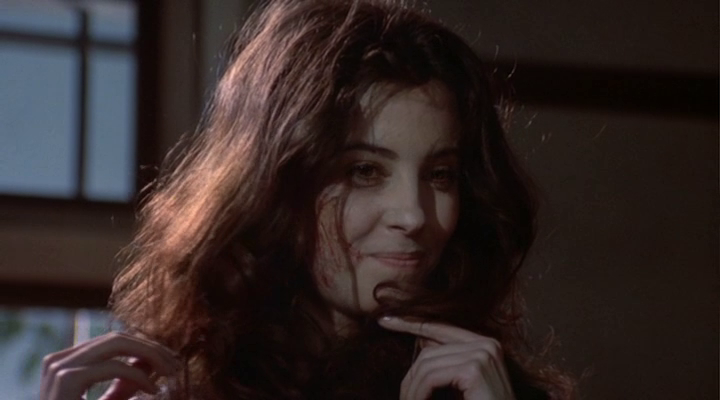
NT: And now for something (almost) completely different. In the same year that they spent some time convalescing in the ASYLUM (1972), the producers at Amicus Productions decided to knock out another one of their varied standalone horror films. In doing so, they opted for a fresh take by allotting the principal roles in the cast and crew largely to Amicus newcomers, who were unencumbered by the company’s established history, expectations, and in-house style. The resulting picture, WHAT BECAME OF JACK & JILL? (1972), speeds us from the period-specific Victorian cityscapes of Amicus’s prior standalone, I, MONSTER (1971), to a very contemporary urban English setting. So contemporary, in fact, that with the arrival of JACK & JILL we bear witness to an Amicus first: a film about young people. Though Amicus’s films had been skewed towards a younger audience from the beginning, this film marks the company’s first blatant foray into capturing the pocket change of the youth market. They accomplish this grab for a younger audience’s piggy banks by casting the titular leads as two of that younger generation’s ilk. But there’s a problem here. See, Jack (Paul Nicholas) and Jill (Vanessa Howard) are two vile, shallow, and annoyingly childish cretins.


WHAT BECAME OF JACK & JILL? is a wolf of a conservative social critique in a youth picture’s sheep clothing. The film’s title (a riff on the “Whatever Happened to…?” trend launched by similarly named horror-melodramas by the likes of Robert Aldrich and Curtis Harrington) signals its intent to demonstrate to us what might have become of those archetypal, innocent, hill-climbing water-fetchers if they had grown up to be groovy, countercultural young adults in the tumultuous early 1970s. Yet, director Bill Bain and screenwriter Roger Marshall, both in their middle-age at the time of production, tap into the countercultural youth movement in their film only to attempt to expose how selfish, misguided, and without firm conviction the so-called “social revolution” is. With its emphasis on the argument that the younger generation’s rebellion against the status quo will result only in needless death and ironic retribution, JACK & JILL becomes essentially a morality tale, trumpeting the message “wait your turn, kids.” Our titular youths are lazy and unmotivated sociopaths who simply want to inherit all of Jack’s granny's money rather than work for their own, and their use of countercultural rhetoric to justify their covetousness is intended as a critique of the rabble-rousing younger generation as a whole. The film acts as a reaffirmation of the order of a social hierarchy based upon seniority: the youth are simply too stupid and jealous and selfish to run things, and, moreover, they don’t even want to run things, they just want the keys to the car without asking permission first. 


Contrast the message of this English production to that of roughly contemporaneous U.S. films like WILD IN THE STREETS (1968) or EASY RIDER (1969), and it's pretty obvious that JACK & JILL is the product of a reactionary studio system. Those in power in England-- always a group to cower in a puffed-up moral panic over the threat of any drastic social change-- were obviously unnerved by the youth movement on the rise in the U.S. and on their own shores. Thus, a popular cultural production like JACK & JILL served as a sort of psychological sedative, telling its true audience of worried middle-class parents and their right-wing children that all would be okay in the end, that those frighteningly boarish hippies would do away with themselves eventually, so true citizens needn’t fret for much longer. Bizarrely, JACK & JILL was co-produced and funded by the U.S. production company Palomar Pictures International and first released by 20th Century Fox in New York City in 1972, which signals that those involved thought the film might strike a chord with hippie-fatigued American audiences as well. The film’s financial failure, subsequent wide unavailability on home video, and the resultant near total obscurity it now possesses should give one a clue as to how it was received by both countries’ moviegoing audiences.


However, perhaps some of JACK & JILL’s failure can be chalked up to issues of genre rather than issues of being culturally out-of-step. The trailer for the film paints it as a rollicking thriller in which a pair of sexy young radicals conspire to scare their square old granny to death. This is more or less the plot of the film, but the trailer’s joyous, rock-music punctuated presentation of these basic facts was certain to alienate a large contingent of the film’s intended audience of cultural squares. Furthermore, those genuinely sexy young radicals who might have been tricked into the theater by such advertising were sure to be miffed by their philosophy and lifestyle being lambasted by the filmmakers. What results from this confusion of intention and presentation is a quaint quasi-horror film that appeals intrinsically to no one (perhaps excepting genre nerds like us, of course). JACK & JILL is a succulent gaslight thriller, with those harebrained social and political undertones stuffed inside like dried-up imitation crabmeat. My adoration for gaslight flicks has yet to meet its bounds, and this gaslight scenario is particularly wicked and inventive, playing on the precise unease of the older generations while making an ironic joke out of it. Progressive in its beliefs? Certainly not. Fun to watch regardless? Certainly for a little while.

I’d like to dig a little deeper into all of the above topics and the particulars of the film itself, but first we’ll flip this radical rock-n-roll LP to hear your recorded rendition.


GR: Nothing is quite as surreal as taking in the all the spooky and kooky fare that we’ve been watching so far and then coming to WHAT BECAME OF JACK & JILL?, which features the credits “An Amicus Production” set to the blare of a wailing guitar and angsty vocals as a hip teenager combs his long hair in his grungy bedroom. I think we were listening too intently to Dr. Schreck’s predictions and missed our stop. Clearly we’re outside the boundaries of the charming horrors from Shepperton Studios and have arrived in a land full of loud music and car posters. I want to go home! What we have here is certainly the stuff of eyebrow-raising. Adolescents cavorting about in jeans and getting high on Granny’s pills in the cemetery. Footage of police riots and social unrest playing in the periphery like a Romero flick. Sexual promiscuousness in dark attics. And the narrative glue that holds all this together and that’s sniffed by the two leads is perhaps one of the hoariest generators of thrills and suspense, the gaslight tale. 

But what strange clothes it wears! As you said, this was clearly Amicus’ more conscious way of tapping the vibrant vein of youth (and their wallets) by making an entertainment that, while lacking some of the “kiddie stuff” like vampires and werewolves that we’ve seen before, concerned them and their pimply little lives more directly. Or at least on the surface. If we have learned anything from our venture, it’s that Amicus was a studio that produced stories that more often than not strove for a balanced morality, one that put all the agitators and general sinners in their place, whether it was the callous-hearted guests of Dr. Diablo’s torture garden or the greedy antiquarians who sought to possess the Marquis de Sade’s skull. 


The films have made it clear that anyone who seeks to harm others in their pursuit for personal glory or riches is certain to fail and be punished by supernatural and/or human agents. In this sense I wonder if director Bill Bain and scripter Roger Marshall (adapting from the novel by Laurence Moody) consciously set out to apply a stern slap on the universal keester of the rebellious youth with their depiction of Jack and Jill’s tumble down the moral hill or if they were solely adhering to the hallmarks of the gaslight tale in seeing that the villains received their just desserts in full by the final reel’s end. Did the creative team really mean to examine the meaninglessness and emptiness of the youth revolt by showing us the plight of these two avaricious, doomed fools or was it simply a case of the bad guys paying for their crimes just like in any other melodrama? Of course one can view the proceedings through either (or countless other) of these lenses; I tend to be of the mind that it’s more of the latter than the former, but the implications of this being a dramatic statement on the futility and vacuity of the movement are undeniably strong.


No matter the interpretation, it’s easy to see how WHAT BECAME OF JACK & JILL? ultimately flopped in its attempt to hitch itself to the closest and most successful bandwagons that it could find in the cinematic prairie. Amicus tries to appeal to the young adult market by giving us a thriller that paints its two representative characters as selfish and petty children devoid of any sense of reality who die in the end? The couples’ constant cries of “Youth power!” can’t help but taste a little more bitter each time they’re stated, almost becoming a mimicking playground taunt from the filmmakers to all of the young people in the audience because, as we are soon to find out, the youth have no power at all. The film slyly shows us how Jack and Jill are two babes utterly lost in the wilderness; even a seemingly mundane exchange between the two after Gran’s funeral  (Jill: Did you tip the vicar? Jack: No. Was I supposed to? Jill: I don’t know.) is given emphasis to show us that the couple is much too caught up in their dream-world to even know how to function on a day-to-day basis, their idle hours spent with visions of sleek automobiles and silky nightwear dancing in their heads like visions from a music video. The graffiti that Jill sees with her last, dying glance, “Out with the Oldies,” might as well be Gran returning from the grave to stick her worm-chewed tongue out at the conniving little wench. Had this been a different Amicus movie that probably would have been the case. JACK & JILL ultimately tells us that all of the fighting and plotting and outraging that the kids in the street can muster will only land their silly dreams right where Jill’s blood pools all around her at the film’s climax: in the gutter.

For all of its subtext and ill-fitting political clothes, there is an effective story of suspense and sweaty tension lying at the heart of the film, and it’s this I’d like to turn the discussion over to to find out just what Bain was able to do with the material that succeeded now that we’ve covered JACK & JILL’s broken crowns fairly well. It’s your turn to take the bucket.  


NT: It’s true that most Amicus horrors place karmic retribution against sinners at the center of their narratives. These films strive to demonstrate a restoration of morality, in which wrongdoing and injustice is set right by supernatural means. This presence of a moral supernatural force in the bulk of the Amicus universe evacuates any specific real world politics from the tales’ teachings, rendering them into general platitudes rather than pointed barbs of critique. Don’t be a heel, we learn, or the spookier elements of existence will get you. But, as you note, there are no ghosts, vampires, or possessed pianos in WHAT BECAME OF JACK AND JILL? The comeuppance our loathsome heroes receive is wrought solely from their own loathsome doings. The film sees Jack and Jill’s thinking as so diseased, so puerile, and so reckless in its dumb and blind destructiveness that the supernatural universe need not intervene in their fates by sending Gran back as a flesh-chewing fiend; it knows they’ll take care of themselves. Because of this supernatural absence and the fact that the particular politics of the decade fuel the action on screen, it feels wrong to ignore the wider implications of the film’s message. JACK & JILL refuses to present us with a positive example of a young radical (the protesters seen on television look as barbaric as our heroes), and so we’re stuck with the eponymous hill-tumblers as our emissaries for the whole of the youth movement. This deliberately limited perspective alone ensures that we’ll read the film as condemning the entire generation. If that’s not convincing enough, recall the uproarious scene that visualizes Jack’s fantasy of leading a Nazi youth firing squad against a group of assembled octogenarians. The filmmakers aren’t exactly being subtle here.
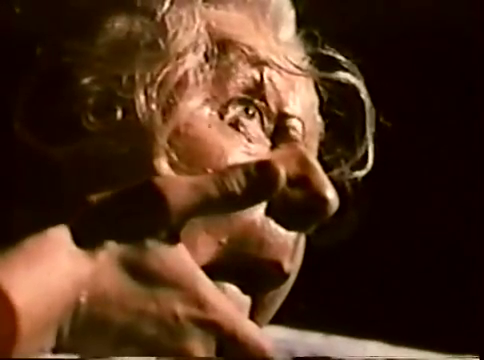

Of course, the film’s chiding of the young is incredibly reductive. As you note, it views our protagonists (and so by extension, all young adults) as no more than helpless children with the unfortunate addition of raging sex drives. As clever as they might be in their efforts to obtain power, once they possess it they immediately squander it and can do little but stand around and wait for adults to wipe up the mess. Jack’s whimpering, childish cries for his deceased Gran’s assistance in the film’s final moments is a little on the nose in this regard. The film also presents an entirely shallow reading of the youth movement’s aims, summarized succinctly by Jack in his conversation with Gran about the elder generations in power being like those who have sat at a table in a restaurant too long and are unwilling to give up their seats for the starving youth out in the cold. The film assumes the youth movement exists as a premature grab for power from those who are underserving. It believes the youth aim to replace the current power structure with an identical (albeit younger and hipper) version of their own, rather than eliminate that oppressive power structure altogether. It’s as if the filmmakers based their interpretation of the youth movement solely off newspaper headlines.


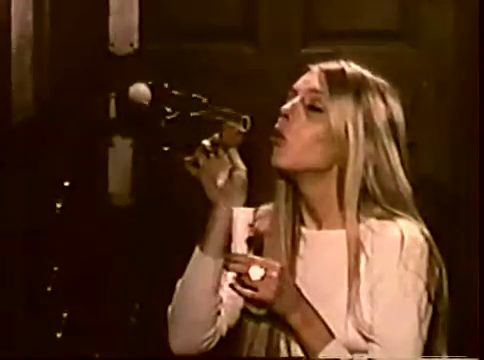
Ironically, the use of phony newspaper headline hysteria is precisely how Jack & Jill go about their gaslighting business, and this is where lies most of the film’s joys. Gran (Mona Washbourne) is an elderly shut-in, so her understanding of the world outside her front door is colored exclusively by distorted media images on television and her grandchild’s even more distorted (and often untrue) yarns about a violent, militant youth movement. She’s told by Jack, and believes without question or tangible evidence, that the youth have mobilized and begun stripping the elderly of their homes. Her gaslighting progresses slowly over the film’s first half (sometimes bizarrely: this may be the first and only time an overheated electric blanket and blown bubbles have been used to gaslight someone), but it climaxes with Jack’s assertion that the youth are now coming for Gran, too. Jack and Jill stage a wonderfully thrilling ruse, banging on the walls of Gran’s house to the pre-recorded sounds of a riot until she dies of a heart attack. It’s both the film’s most suspenseful scene and the lynchpin of its critique: the youth movement is nothing but smoke and mirrors. And a lot of noise.

There isn’t much in JACK & JILL for the standard issue horror fan to glom onto, but those with more eccentric sensibilities will find moments of it irresistible. For instance, the Nazi firing squad fantasy, which transitions, incredibly, to another fake-out dream fantasy in which Jack machine-gun’s Gran in her bed. There’s also cemetery lipstick defacement, Juicy Fruit kisses, demented piggybacking, and the aforementioned snorting of Gran’s heart pills to keep us weirdoes entertained. The film, like its nursery rhyme source material, tumbles down in the last third, post Gran’s coronary, but this is an undeniably fascinating curio that we’ve dredged up from the bottom of the Amicus well.


GR: I share the same amount of enthusiasm as you for JACK AND JILL’s spirited attempts at Grand Guignolery and suspense and your view that the filmmakers offered an incredibly unfair depiction of the youth movement. Whether it was their goal to bitingly critique the opinions of contemporaneous young people or simply ignore the greater implications of the so-called “revolt” through sheer negligence, the end product carries a social message that is completely one-sided and that seems ignorant in its sheer earnestness. 

But enough of all that political yammering. How does WHAT BECAME OF JACK & JILL? stand up as an entertainment? You’ve already detailed some of the juiciest moments, the pinnacle of course being the final offing of Gran through the use of the staged riot. It’s an ingeniously new and clever variation on the typical gaslighting process that we’ve seen before. The gaslighting of an unfortunate soul is usually a more intimate matter between two parties, and the bits of stage magic that the perpetrator uses are of a more quiet variety, at least at first, like dribbles of blood, disappearing/reappearing objects, or maybe even some makeup and a fright wig if they’re feeling adventurous (refer back to “Method for Murder”). JACK & JILL is the first time to my recollection that the perpetrator(s) have used a kind of global scare to torment their victim into cardiac arrest. Gran can only clutch at her heart and beat upon the walls as the sound of the fabricated extermination squad’s marching boots advance ever closer, terrified that they have come to snatch her away and put a bullet through her wrinkled head. Jack and Jill go all out in their charade, and the constant uproar of shouting and clattering builds to a wonderful crescendo where Gran, finally overwhelmed with utter terror, collapses to the floor. It’s the movie’s best, grandest set piece and, had I been in Gran’s slippers, I would’ve been just as overcome. 

Those visions of the slaughter by Nazis are rather surprising and colorful given the film’s overall gritty and glum aesthetic, like a fantasy sequence from an entirely different movie. Interestingly enough, I was immediately put in mind of AN AMERICAN WEREWOLF IN LONDON (1981) after seeing the maniacal S.S. troops and their blasting machine guns. In that film, David Naughton has a dream where he sees his entire family slaughtered by a fleet of demonic soldiers. He “awakens” from this vision in his hospital room only to discover he’s in another dream when one of the troops jumps out and knifes a nurse to death. The similarities between these scenes are amazing and one can’t help but wonder if Landis caught a showing of JACK & JILL and this particular sequence sat stewing in his brain during the production of his own film. 

There’s also a small but effective dose of droll humor fueling some of the picture’s other moments, such as the duo’s scoping of a seedy rock and roll club for a potential lady meant for Jack to woo and wed in order to sidestep a stipulation in Gran’s will; Jack’s general enthusiasm for picking a girl is met with deadpan disapprovals from Jill who merely shakes her head at her partner’s selections. She also gets to speak some of the film’s most colorful dialogue when she flashes with anger and jealousy at Jack’s willingness to go through with this particular phase of their plan: “Smoke pouring out of your pants. Horn on you like a rhino!” She gets another chance to show her flippant attitude when, in an outburst fitting of Mr. Torrance, Jack lays siege to the dining room with a fireplace poker, smashing wood and china with reckless abandon to which his lady offers: “Feeling better?” Not only that, but Jill proves that she can give as good as she gets when she returns a slap to Jack that is just as vigorous as the one he delivered to her pretty little face. 


Along with this humor is a stinging cruelty that’s doled out by our two naughty kiddies. It ranges from the heartless (Jack stops to pop a zit in the bathroom while Gran suffers an attack and begs for medication) to the heartbreaking (Jack constantly interrogates Gran about a phone call she received from Jill posing as a type of census taker until the woman finally breaks down and cries “You would think it’s a crime being old!”). There’s no doubt that out of the cast of ne’er-do-wells that we’ve seen thus far in the Amicus films, Jack and Jill fully deserve the fate that finally comes to claim them for so brutally hounding the gentle grandmother right into her grave. But, as you say, it’s no otherly, monstrous force that does the duo in but rather their own devilish natures. Like the scheming couple from many a film noir, Jack and Jill find out the hard way that when push comes to shove they’ll eagerly send one another crashing down the hill. They don’t deserve any better. 


Wednesday, April 2, 2014

Shepperton Screams (Part VIII): Asylum (1972) dir. Roy Ward Baker

For sixteen weeks, Jose Cruz of The Grim Reader and I will be delving into the complete horror filmography of Amicus Productions and regaling you with our spirited discussions. Below is our mutual consideration of Amicus's fourth anthology, ASYLUM (1972). Check back every week for more dialogues and (naturally) more nightmares.

GR: As the lights go up and we see a car roaring up to the graveled drive of the dusky, imposing insane asylum, the rousing strings of Mussorgsky’s “Night on Bald Mountain” blaring overhead, it seems like Amicus is revving up that great big Gothic engine that ran so many of their other horror vehicles. But a curious thing happens at the onset of the company’s fourth anthology film, the straightforwardly titled ASYLUM (1972), when Dr. Martin (Robert Powell) walks through the mist-shrouded, wrought-iron gates and steps into the main foyer of the madhouse. Director Roy Ward Baker (helmer of such Hammer fare as SCARS OF DRACULA [1970], THE VAMPIRE LOVERS [1970], and DR. JEKYLL & SISTER HYDE [1971]) eschews the mad horror fever vibe for a more muted approach. The feeling that I received upon watching the film is that everything became very crisp and antiseptic, the usual gaudy colors and gallows humor almost completely disposed of in favor of a more clinical approach to terror. Some might see this as a detriment, a sign that everything is going to become as bland and tasteless as hospital cuisine. But if you ask me it’s a nicely revitalizing take that signals the new direction that’s being taken in the film, where even Robert Bloch’s adaptations of his own stories subtract any of the tongue-in-maggoty-cheek humor that was such a staple of his work.


I guess I just have a thing for quiet horror, and as much as I adore the high melodramatics of black-hearted Bedlam-keepers and savage forms of patient therapy, I find the sun-dappled, whispery quality of the insanity on display here to be much more unnerving than babbling insect-munchers in straitjackets. In my original review of the film, I made a comment that the inmates (more directly Baker, Bloch, and company) feel no need to play up the craziness of the surroundings just because there’s a newcomer taking the tour. All the patients go about their day doing exactly what they normally do; sewing invisible clothes; giggling in the mirror; playing with dolls. Even these moments are played with such casualness that one might not be entirely sure that these people are mad but rather the victims of some horrible universe that has seen it fit to punish them and lock them away. Whatever the case is, the patients are never fazed that an outsider is amongst them. They have far greater things weighing on their minds, for whatever is left of them.

For my money there really isn’t a sour note in the whole show. Each of the stories is icily framed and composed, moving along towards their inevitable climaxes where the main effect that seems to be striven for is not so much shock or disgust like other tales from the Amicus oeuvre as a spidery sense of dread that nestles at the base of the heart. There are still some of the “whacky” plot hallmarks that we’ve come to expect from the house of Rosenberg and Subotsky: phantom limbs that crawl about to enact justice for their dismemberment; a craggy-faced mannequin that comes to life thanks to a magical suit; robotic automatons that strut around like wind-up playthings. 


But all of these items are never given the flourish you see in other films like TORTURE GARDEN (I’m thinking especially of how Freddie Francis framed the diabolical piano Euterpe with his leering fish-eye lens and purple lighting). This is not to say that there’s anything wrong with those methods (for the record there isn’t and I freaking love them), it’s just that Baker’s tactics are different here. I don’t find myself grinning when the chopped-up body parts stir to life like I do when ol’ Euterpe gives Barbara Ewing the heave out the parlor window. I feel unsettled. I don’t mean to imply that Baker is making the supernatural occurrences in ASYLUM seem real, just that his downplaying of the humor and the seriousness with which he approaches the various ghastly apparitions suffered by the patients reminds us that these things are very real to them and thus helps to remind us that though their stories may be fabrications their damaged minds certainly are not. And that’s the real point at the end of the day for Dr. Martin, isn’t it? To find the mad wolf in sheep’s clothing. 

Were you game for the search of Dr. Starr, or did you find that ASYLUM drove you past the breaking point?


NT: A "muted approach" is certainly one way of putting it. A glum, humorless film, ASYLUM is-- in my estimation-- the worst anthology Amicus would produce. I call it humorless, but it's worth noting that the film nonetheless sends me into fits of laughter with its wriggling, butcher-paper wrapped limbs, animated mannequin in a technicolor dream coat, and murderous, mind-controlled, pint-sized silver Lego "mannikins." I know you see an unsettling dread in these objects, but I simply cannot. I think ASYLUM features some of the dumbest horror set pieces that Amicus would adapt from author Robert Bloch's particular literary madness. Yet, the film never acknowledges-- even in passing-- the absurdity of its sundry stories. Backpedaling furiously from the outright comedy of their last anthology's final segment, the divisive vampire chuckle-fest "The Cloak" from THE HOUSE THAT DRIPPED BLOOD, the Amicus brain trust now appears to believe that the injection of any intentional humor or irony into their films would be taking the low road. Rather, they allow each of the film's segments to play out as if it were a mini-masterpiece of genuinely terrifying cinematic horror. This is an egregious error, again demonstrating Amicus's regrettable mid-life crisis of tone and direction. It's a simple equation, really: Ludicrous horror stories + Totally earnest presentations = Unintentional comedy. 

And the laughs come echoing off the walls of the asylum. I'd charge that ASYLUM, in its attempts to establish itself as a legitimate horror film, instead stumbles into the overwrought, the needlessly bombastic... for lack of a better term, let's call it the horror equivalent of melodrama. Remember when TORTURE GARDEN, the Amicus anthology with the most successfully balanced tone that we've watched thus far, used Chopin's "Funeral March" to put an ironic wink into its ridiculous yet sincere murder of Barbara Ewing by a grand piano? Here, we have "Night on Bald Mountain" opening the film in austere, Old Dark House pretentiousness. Seriously? (Even THE OLD DARK HOUSE (1932) is a deliberately funnier film than ASYLUM.) Case in point, examine the goofy, overlong scene in which Robert Powell stares in concentration at the pencil-sketched histories of psychiatric medicine adorning the asylum's front staircase. The rather poorly drawn figures and scenes are lingered upon as if they were depictions of genuine fright, while the pilfered classical score pumps away audaciously in the background. When the camera goes so far as to dramatically spin around and zoom in on one of the silly drawings, you might sense the over-seriousness I've diagnosed.


I'm not certain who to blame for all this. Director Roy Ward Baker is certainly no talentless hack (I don't think we'll see Freddie Francis enter The Criterion Collection anytime soon, unlike Mr. Baker), and he would in fact embrace the Amicus house style with his later, much more successful anthologies for the company (THE VAULT OF HORROR [1973] and THE MONSTER CLUB [1980]), but this initial showing is rough-going. The massive cast of esteemed actors (Robert Powell, Patrick Magee, Peter Cushing, Charlotte Rampling, Britt Ekland, and Herbert Lom) perform the material admirably, but the material does them few favors. Bloch is easier to blame, and producers Subotsky and Rosenberg easier still: these folks have been in this horror business long enough to have a sense of what works and what doesn't. Or at least you'd think so.

Believe it or not, I do actually admire some things about the film, though more in theory than in practice. Before I rant about all that, perhaps it’s better to turn it back over to you, so you can temper the taste of my bitter medicine with some sweets.

GR: Good God man, are you trying to spoon me lye?


Obviously, everyone has their own tastes and I can even agree with you on certain points, but I just can’t seem to see the “glum and humorless” aspects in ASYLUM that you do, besides the fact that it doesn’t ever really play for laughs which is something that’s not necessarily uncommon in a horror film. It does diverge from the typical Amicus style, but I don’t have any qualms about that whatsoever either. The creative forces attempted to take a more stoic (but not suspense-less) approach to horror and, if you ask me, they mostly succeeded in that task. I understand that my opinions may be taken into question after the dubious affection I showed for THE DEADLY BEES (1966), but I think ASYLUM proves itself to be worthy of its brethren and quite dark and disquieting during its best moments.

Again we have another spin on the “investigative wraparound,” here involving the aforementioned Powell being posed an unconventional task by the wheelchair-bound Magee in order to gain employment within the eponymous facility: he must interview a series of patients in order to determine which is the fallen Dr. Starr, former co-head of the institution who is now mentally lost due to some traumatic event. It’s these interviews that serve as the lead-ins to the quartet of terror tales.


The first, “Frozen Fear,” is the one that involves those infamous ambulatory parcels that feature so prominently in the film’s advertising. This is Bloch at perhaps his most comic book-esque, the story so short, sweet, and stingy that it’s quite easy to envision it under the artistic pen of Jack Kamen or “Ghastly” Graham Ingels from any one of William M. Gaines’ suspensbooks. Walter (Richard Todd) is the devious, cravat-wearing husband who loathes his voodoo-worshipping wife Ruth (Sylvia Syms) enough to murder her so that he may run off with perky brunette Bonnie (Barbara Perkins). But alas, that pesky magical amulet Ruth always wore makes it tough to stow her neatly chopped and wrapped body parts away in the new freezer… they just won’t stay still! Now, that description would lead one to suspect something indelibly silly is going to occur, but this segment is truly and honestly eerie, in no small part due to the sturdy conviction demonstrated in front of and behind the camera.

One specific element that surprised me was how bloodless the killing of Ruth was. The rest of ASYLUM is similarly free of splatter, but the death by hatchet could have easily been shot to its full exploitative level to satisfy the sanguine-thirsty audience, but Baker and Bloch appropriately opt to have the messy aftermath take place all in our minds, suggesting the gruesome aftermath only with the presence of some plastic tarpaulin, a mop, and of course those little parcels wrapped in brown butcher paper. If one is willing to suspend their disbelief and take the events that occur next as the visions of a mind crumbling under trauma, then the sight of the segmented Ruth moving in her crinkling wake towards the conniving Bonnie might not seem so ludicrous, but I find it all incredibly creepy no matter the context. How can you not suppress a little shudder when you see those twitching fingers tear from the paper to grab the air vent grating as they reach closer and closer to the screaming Bonnie? The only thing our little homewrecker can do is try to ward the grasping and gasping appendages away like so many hungry ants and just chop and chop and chop…


“The Weird Tailor” concerns the forces of black magic and the supernatural a little more directly than the incidental tag of “Frozen Fear.” An impoverished clothesmaker, Bruno (Barry Morse), is requested by the mysterious Mr. Smith (Peter Cushing) to stitch together a suit from a peculiar, glowing cloth following explicit directions outlined in a little black book riddled with pentagrams. The need for rent money overrides his sense of foreboding, but upon making the delivery to Mr. Smith’s abode, Bruno discover that clothes really do make the man—rise! 

As much as I do like this story, the only time that it really seems to sing is when Cushing is on the scene as the morose Smith. The pall of depression that no doubt still hung over the actor from the passing of his dearly beloved wife is so perfectly and poignantly captured in his performance. Only a man who has lost someone so beloved to him could so accurately embody the anguish that follows death. The entire segment is worthy for inclusion for Cushing’s final scene alone. Bruno enters Smith’s shadow-choked home to discover, propped in a casket and illuminated by the glow of black candles, Smith’s deceased son whom the suit was made for in order to bring him back to life (information which, by the way, is cleverly communicated to the viewer by a series of macabre illustrations from the little black book sans commentary). 


When Bruno first inquires Smith about what lies in the locked room, Cushing has this beautiful moment where you see it almost pains him to mention it. It’s only there for a second before he very calmly pushes past it and gently answers “Never mind.” Then of course when Bruno tries to flee the coop Smith holds him at the point of a gun, but Cushing’s attitude is more pleading than predatory and not for one instant becomes melodramatic. His red-rimmed eyes, the desperate tremor in his voice; it’s all painfully beautiful and Cushing truly elevates the material to poignancy in his brief moments onscreen. The closer with the living mannequin seems like a non-sequiter in comparison, an unnecessary twist that Bloch has to furnish his tale with because that’s his thing. What do we get for all the heartache and tragedy that Cushing brings to his role? A mustached dummy with an oatmeal face strangling Barry Morse. Not the classiest way to end things, but I do admit I’m an animated automaton/doll/ventriloquist dummy apologist.

I’m very interested to know what your thoughts are on the third tale, “Lucy Comes to Stay.” “Homicidal split personalities” was one trope that eluded the cutting edge of your scalpel upon your initial estimation of ASYLUM, so I couldn’t help but wonder if it holds any kind of clout with you. In it, young Barbara (Charlotte Rampling) comes back home after having a little nervous breakdown, one kickstarted by her best friend and (we will find out) alternate persona, Lucy (Britt Ekland). We only get a feel for Lucy’s tendencies in degrees, as she coaxes Barbara to stop taking her medicine and live a little on the wild side. 


There’s some more nice understatement implemented by Baker here that gently scores the ascent to Bloch’s admittedly foreseeable climax. Look for instance when Ekland sits in front of a mirror during one of their little talks; Rampling is framed in the foreground of the mirror’s reflection so that the effect becomes a sly nod that when Barbara looks into the glass she sees Lucy. This also neatly ties in with the concluding wraparound of Barbara’s tale. When Dr. Martin asks the lady where her friend Lucy is, Barbara acknowledges the mirror in her room (possible safety issue there?), laughing. “Lucy Comes to Stay” is the most subdued entry here, with hardly an absurd bogey to be found. That is, besides the gentle Swiss features of Miss Ekland. The uneasiness is nicely bumped up as the story goes on as Lucy cuts the phone lines in the house and gives poor George (James Villiers) an impromptu coronary operation during his evening paper. I think that at the very least you would agree that “Lucy Comes to Stay” is the most inoffensive, harmless yarn that’s also free of any unintended humor. For me, it’s a modest enough time; Lucy never overstays her welcome.


As if this film weren’t atypical enough of what we’ve seen from the folks at Shepperton Studios, ASYLUM introduces its fourth story, “Mannikins of Horror,” as not an isolated narrative but one that is directly integrated in the wraparound with Powell and Magee. This may very well be the first (and only that I can think of) instance of something of this nature occurring in a portmanteau horror film (WAXWORKS, the silent German picture from 1926, incorporated a somewhat similar idea when the poet character who created that film’s vignettes found himself face-to-face with Jack the Ripper in the “final story,” but this was found out to be a nightmare so one wonders if that truly counts). Anyway, Herbert Lom is the patient here, Dr. Byron, who spends his idle hours making miniature, robotic figures that possess molded clay facial features and steel bodies (a cheaper route than fully clothed humanoids, no doubt). Byron claims that these figures are completely anatomically correct (besides the, you know, robot bodies) and that through the incredible power of his mental will, he is able to inspire animation and control in their cold little heads.


As defensive of ASYLUM’s rights as I am willing to be, I will concede to you that of all the stories “Mannikins of Horror” is the one that is the easiest target of giggle fits. I can sympathize with your sentiments of the film’s over-seriousness as it shows especially in this segment. Lom gives it everything he’s got, commanding in his booming voice even as he shows us his cabinet full of toys. Seeing Little Lom make its sloooow approach to Magee’s parlor (even using a dumbwaiter as a means of transportation!) extinguishes much of the terror that could be generated from the premise; compare the automaton here to the quick-as-lightning and ferocious He Who Kills from Dan Curtis’ contemporaneous TRILOGY OF TERROR (1975). The dolly used here is much more patient in its attack, inching that long, sharp pin closer and closer to Magee’s neck. As gripping as Olga Karlatos’ meeting with a huge splinter? Probably not. But it does give you a slightly queasy feeling for what’s to come, and the smashing of the automaton to reveal its very real and very red insides complemented by Lom’s agonized screams briefly brings us back to the old Amicus world (not to mention showing you how fond Bloch was of recycling; see “Sweets to the Sweet”). It’s a bit of a downer too because the original “Mannikins of Horror” is a legitimately original and creepy story that gets sadly shoehorned into ASYLUM, skimping out on the loving details that Bloch gives to the anti-hero’s careful construction of his prized figurines and how he fancies himself a Frankenstein. Now there would’ve been a story!


Somewhat surprising (and silly) too is that, despite the great terror that Powell depicts at seeing the brutal remains of Dr. Byron, he seems relatively okay by the next morning, not at all the kind of composure one might have upon discovering that dolls can kill, an odd note that would have been eradicated had “Mannikins of Horror” been a standalone yarn that just ended right at the discovery of the mutilated doctor. That one aspect is sloppily handled, but we forget (or are made to forget) this once Powell finds out another of the asylum’s dirty secrets and here the story does end. For him. By the time the final stinger comes, we already have a good idea of what’s going to happen next, in order: New victim arrives, sinister figure acknowledges the audience, cue creepy music. So yes, ASYLUM is by no means a perfect film, but I don’t think it deserves to be committed for reasons of inanity. It might lack the color and gusto of Amicus’ other notable films, but if the spirit is willing there is enjoyment to be had. 

Call me crazy. 

NT: You’re crazy.


I don’t really mean that. Maybe what I mean is that I’m the crazy one. See, my problem is that I’m psychologically incapable of seeing an Amicus portmanteau film as “dark” or “disquieting.” My doctor tells me it’s a problem of expectations. I’ve seen all the other Amicus portmanteau films, so I know that they’re brightly hued, wickedly humorous testaments to the fact that horror cinema can be messy fun when it wants to be. This is a good thing; this is what I watch Amicus films for. But then I see ASYLUM, and what I glimpse are the same pulpy, over-the-top components that those other films possess, but here they’re employed without the slightest whiff of irony. The jolly good time that could be had with them is perverted and diminished by the truly frightful grasps the film makes at horrific legitimacy. 

Try as you might, neither you nor the filmmakers will ever convince me that a motorized mannequin leg wrapped in butcher paper and wriggling towards its bug-eyed victim is an object of disquiet. I sense through our conversations so far that you’re more forgiving of ludicrous concepts when they’re carried out with conviction. (The entirety of THE DEADLY BEES notwithstanding, I think we see in your much-loved “Creeping Vine” segment from DR. TERROR a problem similar to that which I see in ASYLUM’s tales.) I don’t fault you for this appreciation, but I can’t agree with it. I think filmmakers should be aware of their limitations and work around them. With a script this hackneyed and effects this goofy, those involved in the making of ASYLUM should have known better than to shoot for 1960s Hammer levels of grandiosity and sincerity. Can so many people on set have taken a look at the finished “mannikin” sporting Herbert Lom’s pint-sized head and all at once thought to themselves, “There, we’ve done it: we’ve created terror incarnate”? The mind boggles.


Considering that you’ve already covered the film’s four tales in great detail, I’ll dispense my pills of wisdom succinctly:

As much as I’ve already poked fun at it, “Frozen Fear” is easily the most enjoyable of the lot. As you note, it features the same sort of exaggerated domestic violence and supernatural karmic revenge that would make it a perfect fit in Baker’s next Amicus film, the EC horror comics adaptation THE VAULT OF HORROR. Alas, a certain devilish spark that would bring this episode fully in line with those later adaptations is absent: it simply doesn’t know that it’s funny. How can a character, after chopping his wife into bits and shoving her into the freezer, say to himself, with seemingly no self-awareness at all, “Rest in pieces”? The humor is obvious in the material, but the presentation appears blind to it. The above line does not inspire a giggle from his audience, but a groan. Later, I laughed when those “chilling” bits of reanimated frozen meat would have had me scream. The moment when a lady started chopping herself in the face with an axe serves as an appropriate metaphor for my frustration with this segment.


Similarly, any potential “The Weird Tailor” could have had is foiled by a bizarre concept and crummy execution. The notion of an astrologically powered technicolor dream coat isn’t unsalvageable, but this tale has no idea how to end in a way that pays off the established emotional poignancy. The impoverished tailor (Barry Morse) is sympathetic in his desire for the collection of money owed for services rendered, and his accidental murder of the crazed but equally sympathetic Cushing (as a grieving father) makes this resolution a tricky one. Rather than exploring this moral quandary, the filmmakers shove in that (as you so aptly put) oatmeal-faced living mannequin to lead us out. Ugh. What if, instead, the tailor had used the magical suit to cover up the murdered Cushing’s body, and what if this resulted in Cushing rising from the dead and being horrified to discover that the astrological power had been wasted upon him rather than his beloved corpse of a son? The tailor, in dumbstruck silence, watches this all in horror and regret. There. I wrote in two lines and two minutes a better ending than our filmmakers could muster.


You noticed the omission of “Lucy Comes to Stay” from my previous lambasting of the film, but rest assured this wasn’t because of any affection. I agree that it’s inoffensive and free of unintentional laughs, but that actually makes it more difficult to sit through than the silly ones. This segment, in its generic slog, is almost totally unremarkable. Thus, I will spare myself the effort of remarking upon it any further. A waste of Rampling and Ekland’s considerable talents.

Lastly, there’s “Mannikins of Horror.” Ah, “Mannikins of Horror.” What can I say about the segment that can’t be made immediately apparent to any viewer who lays eyes on the miniature Herbert Lom doll? It’s an extremely lightweight segment, but its central idea isn’t a terrible one (astral projection and the transference of consciousness in the hope of committing nefarious murder by proxy!) While I haven’t read Bloch’s original story, it’s not difficult to see that much has been omitted in order to fit it into the confines of the frame narrative.


And that frame narrative is what really interests me about ASYLUM. This is as complex as their wraparounds will ever become, and I think it’s incredibly effective, at least conceptually. If you recall, one of my beefs with THE HOUSE THAT DRIPPED BLOOD is that its frame story, though similarly ambitious (and also integrated with the final tale), was given little screen time to develop. Conversely, ASYLUM nearly forgoes a fourth story entirely in favor of further exploring Powell’s search for the insane Dr. Starr. There are easy gripes to pick with this wraparound, as you note, and these problems significantly devalue it. (The revelation of a cackling, just short of drooling Dr. Starr also harms the “casual insanity” aspect you argued early on.) However, I quite like the implication provided by the intertwining of the frame story with the “Mannikins of Horror” segment: supernatural occurrences are a reality. The fact that Lom really can project his mind into a killer Lego man is proof of this. Thus, we’re encouraged to re-examine the three tales that Powell’s character has already heard and casually dismissed through psychological diagnosis. Were these patients perhaps telling the truth about their supernatural experiences? Wisely (or perhaps by sheer accident), the film doesn’t provide us an answer, and we’re left to consider it on our own as the credits roll.

Unfortunately, I’ve yet to consider the possibilities, as I was preoccupied by the happiness that overcame me at seeing those credits begin. I had (and have) checked out of the ASYLUM for good.


Wednesday, March 26, 2014

Shepperton Screams (Part VII): I, Monster (1971) dir. Stephen Weeks

For sixteen weeks, Jose Cruz of The Grim Reader and I will be delving into the complete horror filmography of Amicus Productions and regaling you with our spirited discussions. Below is our mutual consideration of Amicus's I, MONSTER (1971). Check back every week for more dialogues and (naturally) more nightmares.

NT: The year 1971 saw Amicus return to standalone horror films with the release of I, MONSTER, a variation on the literary STRANGE CASE OF DR. JEKYLL AND MR. HYDE. Until then, Amicus hadn't produced a standalone horror since 1966, when their insect-infused murder mystery THE DEADLY BEES failed to stir up much of a buzz with filmgoing audiences. Five years is a long period of time in small budget genre filmmaking-- heck, Amicus made eight additional films between the releases of THE DEADLY BEES and I, MONSTER-- so it's not absurd to imagine that Amicus honchos Milton Subotsky and Max Rosenberg were hesitant to dip back into horror in any context outside of their winning anthology formula. Consequently, the producers simply adopted another studio's once-winning formula for their next venture: I, MONSTER is a Hammer film in everything but credit. It's well-acknowledged (even within their own films; see: THE MONSTER CLUB [1980]) that Amicus made their horror films in a contemporary setting because it was cheaper to do so, but here we find ourselves transported back to an atmospheric vision of late Victorian England. The film's source material (for once) isn't the pulpy pages of a Robert Bloch story, but instead the classic, more mannered horror of Victorian author Robert Louis Stevenson. The starring roles are filled by Christopher Lee and Peter Cushing, who-- though certainly no strangers to Amicus's films-- here seem to be correcting the error Hammer Productions made in never casting the constant duo in any of their versions of the JEKYLL & HYDE story, as they had for so many other cinematic monsters.

The problem is that with I, MONSTER Amicus made a circa-1960 Hammer film in 1971. In 1960, Hammer released THE TWO FACES OF DR. JEKYLL, and one can easily chart the similarities between the subtle and restrained approach of that film and what we find in I, MONSTER. Yet the English cinematic horror of 1971 was not what it was in 1960. In 1971, English audiences were subjected to the lurid horrors of films like THE ABOMINABLE DR. PHIBES, THE BLOOD ON SATAN'S CLAW, and PSYCHOMANIA. More tellingly, 1971 saw Hammer release their second turn at Stevenson's story, the salacious gender-bending romp DR. JEKYLL & SISTER HYDE, alongside other bold, violent, and raunchy material like COUNTESS DRACULA, HANDS OF THE RIPPER, and LUST FOR A VAMPIRE. In contrast to what was happening in English horror cinema at the beginning of the 1970s, Amicus's over-serious, only slightly sleazy literary adaptation feels woefully out of step with the times. What's all the more ironic is that up until this effort the rest of Amicus's films acted as nose-thumbing heralds for the new garish style of horror cinema about to infect the country's screens. Thus, I, MONSTER feels like a misguided step backwards, a grab at the hopelessly out of reach carrot of respectability that couldn't have possibly occurred at a more inopportune time.


All of this noted, I don't dislike the film. It's far from the most daring cinematic adaptation of Stevenson's novella, but in the Amicus filmography its ambitions at least eclipse those of something like THE DEADLY BEES. I think there are aspects of I, MONSTER worth remarking upon, even if their cumulative effect inspires heads to nod off to sleep. But first, just to make sure you didn't fall into the land of slumber yourself, I'll turn the screen back to you for your general impressions.

GR: A “step back” is exactly the thought that I had after watching I, MONSTER (1971). (I actually wrote “two steps back” in all honesty.) Which is a real shame because, as you noted, the horror genre was going through such a wonderful experimental transition at this point after films like TARGETS (1968) had signaled the changing platform of the world’s terrors that all the elements seemed to be in place for something innovative or at least remotely entertaining to be assembled from Stevenson’s engaging little mystery, if nothing else than a faithful adaptation. But though certain details in the film remain quite close to the text (this is one of the few versions that retains Enfield’s “story of the door”), Subotsky makes some very odd exclusions and changes in his screen story. For instance, why does the film acknowledge its debt to the novel in the opening credits but has the name of the main character(s) changed from Henry Jekyll and Edward Hyde to Dr. Charles Marlowe and Edward Blake? I fancied Subotsky was working in a literary allusion to Christopher Marlowe, the 17th century playwright who had penned the first famous version of the Faust legend for the stage—a drama that also shares a central figure who meddles in the nature of man through dark and mystical means—but I think that may be giving him a bit too much credit. My main beef with I, MONSTER is that everything seems so half-hearted and lackluster that it leaves me without much to praise or damn really. I say this all as a sucker of Victoriana, and while all of the fog and gaslights and heavy draperies and muttonchops brought a smile to my lips, the whole affair moved along at such an unwavering hum that all those images and aesthetics left my mind as quickly as they came in.


It might be too easy to lay all the blame at the feet of director Stephen Weeks (the filmmaker was twenty-three when he helmed I, MONSTER and he had only made short subjects up until that point; he only directed three other movies afterward, two of which were versions of the Sir Gawain legend), but it must be said that there isn’t too much style augmenting Subotsky’s mainly substance-free script that could have at least made the shortcomings of the screenplay work as a visually evocative horror piece. There is one good and surprising sequence where Blake’s trampling of a child (who I noticed was Chloe Franks from THE HOUSE THAT DRIPPED BLOOD [1971] though IMDb does not list her in their credits) is seen as a hazy dream where the characters move in slow motion and the villain is depicted as only having two mad eyes staring from a white, blank face, somewhat reminiscent of the excellent scene from the spaghetti Gothic NIGHTMARE CASTLE (1965). Alas, it is so fleeting as to be almost subliminal. 

I got the impression that Amicus was a tad nervous getting back into the standalone mode, and you see little hints that they were trying for that spicier flavor that Hammer was working into their productions. Repressed sexuality is discussed more than given any actual weight in the movie, but we do get a peek at some illicit photographs of models sans corsets and pantaloons in Dr. Marlowe’s study drawer that hint at a naughtiness the film never fully explores. Ditto too for the drug addiction implications of Jekyll/Marlowe’s scientific experimentation, though his gold case where he keeps the transforming liquid looks like a classy druggie’s kit. It’s too bad that they couldn’t go full bore with the trashier aspects, though this was never truly the Amicus house style anyway. There are things to like here, but at the end of the day I can’t seem to rid myself of the feeling that the audience was bereft of a truly solid piece of work. 


Now, if you are up to it, I turn it back it to you to fill us in on the specifics of your thoughts on this middling, bubbling brew.

NT: It's a queer evaluation to make, but to me it seems that Subotsky's script is so ambitious that it winds up tripping over itself in its attempts to incorporate as many novel interpretations of the Jekyll & Hyde story as it can, resulting in a film so thematically muddled and underdeveloped as to appear hollow. In the first act, Marlowe's admission to being a student of Freud couches his experiments quite literally in theories of psychoanalysis and psychology generally, though the novella and nearly all of its adaptations only elliptically address these issues. Marlowe's desire is for his serum to unleash his patients' primal Id while doing away with the pesky Superego. On a larger scale, this would, in effect, rid the population of society's enforced suppression of their basic desires, which fashions Marlowe (at least temporarily) into a sort of counter-cultural rebel with a cause (he gets into a knife fight, too, just like James Dean), who is setting out to free the minds of others with his groovy wonder drug. (Even if his serum only serves to make men into babies, women into sexpots, and cats into banshees, it's what their Ids wanted, isn't it?) 


From this interpretation, we then move into the drug addiction narrative, which you mention above. This theme could bear fine, relevant fruit on its own were it allowed the time to ripen, but soon enough the film has plucked it and cast it aside in favor of introducing yet another piece of thematic implication, this one involving the physical abuse Marlowe suffered from his father as a child. The film hints, in no uncertain terms, that the serum and its remarkable aging effects are transforming Marlowe, physically and temperamentally, into his own abusive, alcoholic, sexually frustrated father. Again, intriguing, but what does the film do with it? These specific thematic approaches to Stevenson's tale aren't as disparate as I, MONSTER makes them seem, and a smarter, tighter script could have found a way to condense and elaborate upon them. Instead, the film devotes much of its last act and a half to faithfully adapting specific scenes and sequences from the novella, all of which have lost the bulk of their relevance in this new context. The result? A final twenty minutes that beg your brain to hit the snooze button. And with a film that falls short of eighty minutes total, that's unfortunate.

But despite his relative inexperience and brief filmography, I hesitate to blame director Stephen Weeks for the messiest aspects of this production. I actually found myself quite impressed with the collaborative work between him and cinematographer Moray Grant (who was working with Hammer at the time on wonderfully atmospheric films like VAMPIRE CIRCUS [1972] and SCARS OF DRACULA [1970]). Many scenes are expertly imagined and executed, from Utterson's nightmare (which you mention above) to a personal favorite scene in which the devious Edward Blake woozily chats up a woman in a pub (which features the principal actors and all the surrounding extras slowly and perpetually shambling to the right hand side of the frame for the scene's duration while the camera follows them on a dolly, as if they were stuck in some sort of inebriated, partner-less ballroom dance or-- better yet-- trapped in a Peter Greenaway film). 


Moreover, I love that Weeks apparently felt no compulsion to rein in Christopher Lee's performance. Not content to simply chew the scenery, Weeks and Lee have his Blake/Hyde blow-torch it. Though the performance veers right along the edges of camp (someone should have perhaps pried the mirrors out of Lee's hands), it never fully descends into that trap: Lee goes so far out, commits so readily to his balding, increasingly stooped and mangled makeup, that a real sense of pathos begins to build in us for this abused, egotistical addict. Though much of this sympathy dissolves by the time we're hit with the standard issue thriller climax, it's notable that the film managed to generate any sympathy to begin with. The IMDb trivia section informs me that Peter Duffell, director of THE HOUSE THAT DRIPPED BLOOD (1971), was originally tapped to direct I, MONSTER but refused (perhaps giving credence to last week's hypothesis about his working relationship with Amicus). I'm happy he did refuse, as I could see a tonally indecisive director like him tempted to urge Lee to blissfully cross his eyes and whistle whenever he took a hit of the serum. If you can say nothing else about Weeks's direction, you can at least admit he was committed to a particular tone and vision, as hopelessly out of fashion as they may have been.

We might call I, MONSTER a botched, antiquated experiment in the Amicus filmography. That would be fair. There are greater sins one could commit, and when we contrast it with the botched experiment of Dr. Charles Marlowe displayed on screen, it no longer seems so egregious. For one, the experiment of I, MONSTER didn't require the stabbing to death of any pretty felines. There we go. That might be the nicest thing we can agree upon about the film: at least its production didn't murder any cats!


GR: Wow. I really hate to admit this, but I actually don’t remember any of that information or insinuation about Marlowe’s father at all. Typically I can follow along with a film no matter how unattached I might be to the events transpiring on the screen, but those details have abandoned my memory as completely as London fog dissipating at dawn. You discussed how the film’s final moments prompt the viewer to tune it all out and I suppose that I just did that much too well. This is quite the shame because that plot device actually sounds very interesting, but perhaps I would have only been disappointed by the lack of follow-through on that end. It’s accurate to say that Subotsky crams in too many (not completely disparate) ideas into the script so that the end result becomes a “Best Of” clip reel of all the themes that other adaptations and revisions to Stevenson’s story have incorporated (there’s also a bit where Marlowe discovers he’s transforming into his dark half one Sunday afternoon in the park like Fredric March did in Rouben Mamoulian’s 1931 iteration). This seems like a repeat of his old DR. TERROR practices, grasping at whatever threads looked intriguing or enlightening only to abandon them all like a cat becoming bored with a ball of yarn. (That last metaphor was written in memory of Trixie, Dr. Marlowe’s clobbered pet cat.) 


Lee’s characterization of the odious Blake is indeed noteworthy, especially as he very rarely got the chance to indulge in portrayals that really allowed him to let loose with wild abandon as opposed to being the ever-stoic pillars of evil that he depicted so many times. One of the rarities of seeing Christopher Lee in a movie that’s shown to us in I, MONSTER is also one of the most terrifying, and that’s when he smiles. Just the way his lips curl up in that depraved little grin is enough to convince you that Marlowe has peered into the abyss and has decided to cannonball into it with glee. Lee gives his moments as Blake some real gusto, especially his predatory stalking of the pub floozy and the way he barks “Now, look!” at Lanyon (Richard Hurndall). The gradual degradation of his features is cannily handled as well, like how his teeth become more pronounced, the skin seems to pale over time, and how Lee sinks his head down to produce a weird double-chin effect. It all builds up to the point that Lee resembles a diseased, jowly maggot slithering through the streets in his dark coat on the hunt for the dank flesh of corruption. That said I have to admit that the other half of that portrayal, our intrepid Dr. Marlowe, has to rank as one of the most “blah” Jekyll personas ever to strut across the laboratory in the search for the Truth. There is no real sense of conflict or drive to propel Marlowe forward in his researches; he is the epitome of the objective scientist, almost reaching the level of apathy as he discusses his findings and hypotheses to the stuffed shirts at the gentlemen’s club with all the vigor of an untenured professor giving a lecture to a room full of pigeons. Lee seems to lack the fire in his belly that you see depicted by Barrymore, Tracy, and even Palance in their respective versions. This might have been meant to act as some kind of layer of verisimilitude or an alternate take on Jekyll as concentrated scientist, but as a conductor of engaging drama it is basically a failure.


The rest of the film does have its share of modest flourishes and hiccups of originality. I had forgotten about that tracking shot in the seedy bar until you mentioned it, and it is a starkly dynamic way the scene is interpreted compared to some of the other stale stagings we’re forced through (most noticeable are the numerous club scenes I mentioned above where the characters sit like statues amongst the cushions with that cliché stock music you hear queued up anytime the world of the rich and fancy is presented to us playing in the background for an added dash of triteness). That scene between Blake and Lanyon becomes near-Expressionistic as it depicts the fiend downing the serum before focusing in on his looming shadow, showing it unwavering upon the wall before revealing the composed and clean Marlowe walking back into the frame. The whole bar scene actually has some other standouts, like when the floozy humiliates Blake in front of the crowd for his gruesome looks. The moment he takes to sheepishly gaze from side to side as the drunk party guffaws at the joke is a refreshingly humanistic approach to the Hyde character. We get a chance to look past his status as the Id personified to view him as an actual person capable of shame in spite of his unrelenting villainy. The later chase of said floozy is blocked a bit oddly, but it ends on a disturbingly effective note when the dame, finally cornered, moves to take off her clothing, apparently thinking that Blake is looking to sexually assault her. She has this attitude of “Alright, alright, if this is going to happen then let’s just get it over with,” but it’s only when she realizes the permanent punishment Blake has in mind that she truly begins to show fear. That was probably the most brilliant and terrifying moment from the entire film, and it’s the one thing that warrants congratulating Subotsky for, whether he fully understood the entire chilling implication of this seemingly throwaway detail or not upon adding it to the script. It speaks to a horror beyond mad science and transformations into boogeymen, to the universal ugliness that we force on each other and how we will, eventually, come to accept it as part of our everyday life. 


The majority of what’s left on screen though, as I said, seems to lack any real punch, and while I’d be more than happy to acknowledge Weeks’ commitment to a defined thematic tone for I, MONSTER, his film goes directly against the praise that I ended my estimation of Peter Duffell and his frenetic THE HOUSE THAT DRIPPED BLOOD (1971) with: “[B]ut one thing it isn’t is boring.” And to say that of a film that strives for a high-thrills ending that includes Christopher Lee and Peter Cushing (or their stunt doubles) throttling each other only to have Lee set ablaze and sent screaming down a flight of stairs only for both him and any sense of excitement we might have had to land with a resounding thud is just such a terrible let-down. I won’t go so far as to say that making I, MONSTER was a waste of time, but I’ll probably not be taking a swig of this concoction again on a black winter morning any time soon.


Next week: Asylum (1972)