Wednesday, November 20, 2013

Robin Redbreast (1970) dir. James MacTaggart

from the BBC's A Play for Today

Logline: Unmarried, upper-middle class urbanite Norah Palmer (Anna Cropper) moves into the country home she acquired in a recent breakup with a long-term partner. Once settled in, Norah begins to meet the village's few eccentric inhabitants who, despite their seemingly benign intentions, have something sinister planned for their new neighbor.

The shot opens on the exterior of a great stone church in the country. The camera zooms in towards the church's massive front window, inviting us inside the building as its bells chime over the soundtrack and a ponderous priest prattles away, extolling the grace of the Lord and his beneficence in allowing the town the bounty of its spring harvest. When the camera enters the church for us, and the priest continues his prattling, we're greeted by a most curious sight: there is no priest (though his voice continues to echo), nor are there any parishioners. The pews stand empty, as does the altar. This ghostly sight shifts into a montage as the frame cuts to static images of various items displayed in the church in honor of the village's Harvest Festival. Images of bounteous fruits, vegetables, and eggs then give way to close-ups of dead animals-- rabbits and chickens, specifically-- fading like spirits in reverse into existence on the bare white altar. The screen cuts quickly between further close-ups of these animals' vacant, bloodied faces as the priest wraps up his prayer of thanks to the Lord. In this moment, we see this food and these corpses not as a celebration of a higher power's gifts to the village, but as an offering of appeasement to that higher power, in hopes of attaining a similar harvest next spring. Almost precisely at the midpoint of director James MacTaggart's Robin Redbreast, the seemingly typical and unremarkable face of drab organized modern religion and culture collides with ancient pagan ritual in a macabre visual paean to sacrifices and offerings, to ghosts of seasons long past, and to death and the life it brings.

Broadcast in 1970 during the inaugural series of the BBC's long-running A Play for Today, Robin Redbreast is one of the great neglected gems of '70s English TV filmmaking. Starring Anna Cropper (of "The Exorcism") and written by John Bowen (who would go on to write two installments of the BBC's A Ghost Story for Christmas as well as one of the other surviving episodes of Dead of Night, "A Woman Sobbing"), the film should be of immediate interest to any admirers of English TV horror. However, the previous commercial unavailability of Robin Redbreast has made the film one more frequently written about than actually seen, a status shared by far too many English TV productions from the 1960s and 1970s, of which some have been lost outright. Though the original color print no longer exists, the film was preserved as a monochrome 16mm print in the BBC's archives. Recently restored and released by the BFI in the best condition possible, this subtle and menacing tale of rural folk horror is now available to the public for appreciation of both its unique sense of dread and its influence on later English horrors.


At its opening, the film introduces us to its heroine, Norah Palmer, as she converses with her snooty London-based friends about her plans to move into a country cottage for a stay of undetermined length. Her move is motivated by her desire to learn to live on her own in the wake of the breakup of an eight-year-long relationship. Wealthy, middle-aged, childless, and unmarried ("sex-starved, as they say," she sighs), Norah looks at her temporary residence in the country as a chance to adjust to her new existence. Although she clearly values independence in her personal life and career, we sense that the dissolution of her steady relationship has created a certain mid-life desperation within her. She recognizes that her unconventional lifestyle will inevitably bestow upon her a social stigma that her relationship previously obscured; she'll be judged by her friends and acquaintances as a woman who sought to avoid the constraints of marriage and thus suffered for it. Despite her obvious upper-middle class self-absorption, Norah is a progressive woman-- career-minded and contraceptive-popping-- and thus sympathetic for her refusal to conform to society's expectations for her. While she wouldn't want to live any other way, she also recognizes the need for self-reliance when faced with the potential loneliness and scorn such a lifestyle may bring. 

Therefore, her choice of the country as the location in which to build up this tolerance is one based in naivety about the countryside's population and its acceptance of modern sensibilities. Like her fellow city-dwellers, Norah imagines the rural villages of England to be peaceful, serene, and almost entirely devoid of human life and contact. The country, she figures, is a place where one can escape society's leering eyes and disdainful judgement. Her friends back home laugh to themselves about how she'll have nothing to do in the country but sit around  all day and develop a drinking problem. Whether the countryside heals or drives one mad, it's clear that these urbanites consider it a place of total isolation. It is this misapprehension of the rural sphere and the slow realization of the country life's sinister complexities that provide much of Robin Redbreast's horrific appeal.


It's not long after Norah arrives in her new home that she's intruded upon by the village's fellow residents. Her housemaid-- Mrs. Vigo (Freda Bamford)-- stands never far out of earshot, the stoic and scholarly Fisher (Bernard Hepton) invites himself into her garden looking for bits of archaeological interest, and her perpetually axe-wielding neighbor-- Peter (Cyril Cross)-- swings his tool incessantly just outside her window. The only village resident she takes a liking to is the young, hunky Robin (Andy Bradford), who is an appealing physical attraction for her but an intellectual bore. And, as with the other villagers, her unambiguous rejection of Robin does little to deter him from lurking outside her abode at all hours of the night. Everything Norah says or does is soon common knowledge among all of those who live in the village, the network of communication surrounding her being eerily comprehensive and instantaneous. The countryside may not provide the all-encompassing isolation that Norah imagined, but the lack of privacy she discovers is still enough to push one into madness. 
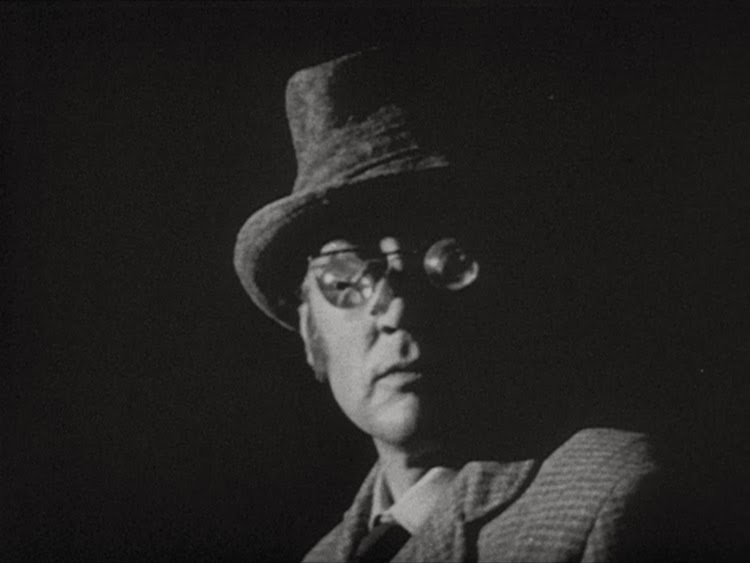

What becomes apparent through Norah's interactions with her new neighbors is the quiet menace of rural hospitality. All of the villagers she encounters are ostensibly friendly and helpful, but it's impossible not to perceive a forced ignorance in their words and actions, as if they could have predicted her various troubles-- rats in the walls, an unattached drainpipe, a bird in the chimney, missing contraceptives-- before they occurred and are attempting to conceal that knowledge. Their selfless, nearly patronizing generosity feels perfunctory and full of secret meaning, with every action they take part of a familiar routine that they're all silently chuckling over. Our suspicions develop along with Norah's, and by the third act she's spouting aloud the same mad notions about the villagers' motives that have been silently forming in our minds from the start. By that point, the villagers' hospitality has evolved into a smiling imprisonment. They cut Norah's phone line and disable her car all while pretending to be of assistance in remedying both. Their slow but deliberate seizure of the concerns of Norah's daily life wrests away the very control and self-reliance that she sought by moving to the country. They maintain their ruse of generosity up until the point that they're breaking down her door and dropping down through her chimney brandishing weapons. These country folk are an unflappable lot, totally committed to seeing their wicked plan through in as ironically benign a manner as possible. 


But it's the reversal of Norah's fortunes with regard to the villagers' intentions for her that provides the film's most ironic twist. The fact that, as it turns out, the villagers don't intend to sacrifice her to their pagan gods appears oddly disappointing to both Norah and the audience. Her self-absorbed Me vs. Them urban paranoia of country folk and their ways is somewhat deflated by her relative uselessness in their ritualistic scheme. She's demoted from the sacrificial victim, or the "prized bull," to the fertile earth that grows the next offering through an orchestrated pregnancy. In the villagers' patriarchal worldview, it's the blood of men that blesses the earth, with women as mere wombs employed to bear such useful kings. For a woman who thrives on her own status as an autonomous subject, the notion of being considered as little more than a reproductive vessel is a horrifying prospect. In this way, the villagers' vaguely sinister actions resemble a Paganist variation on the Satanists' coddling of Mia Farrow in Rosemary's Baby (1968). The ancient conservative practices and beliefs of country society prevent any possibility for a modern woman like Norah to establish her own female identity. From the villagers' perspective, a woman of her type is disposable, but also far from their definition of a worthy sacrifice: they'll use her, but they won't glorify her.

With all revealed, Norah sees no choice but to hop into her miraculously repaired automobile and speed away from the village back towards the city she previously fled from. A final glance she casts behind her from the comfort of the driver's seat catches a momentary image of the assembled villagers in their true forms: they appear to her in ancient ceremonial garb, as emblems of a repressive society of superstition and tradition that's horrifying not for its explicit violence but for its patriarchal lack of interest in the individual woman. For them, Norah is the old hen that lays the egg to be offered on their sacrificial altar. If she refuses to lay it, they can always find another chicken. But, most chillingly, they're certain she'll lay the egg for them eventually: what's a woman like Norah to do, raise a child on her own in the big city while those around her silently cast judgement? The grinning, folksy paganism of Robin Redbreast would be revisited a few years later in Robin Hardy's The Wicker Man (1973) (and then again, more specifically, in The Wicker Tree (2011)), but neither film explores this singular horror of gendered insignificance.

Wednesday, November 13, 2013

The Exorcism (1972) dir. Don Taylor

from the BBC's Dead of Night

Logline: Two upper-middle class couples retreat to a refurbished country house for the weekend. All seems well until the lights go out and the wine begins to taste like blood: for this house had a previous occupant, and she's not soon to let her and her children be forgotten.

"The Exorcism" was the first short film to be broadcast in the fall of 1972 under the masthead of BBC2's short-lived horror anthology series Dead of Night. Of the seven episodes produced for the series, only three have survived past their initial broadcast, the rest having fallen victim to the BBC's reckless tape scrubbing practices of the era. (These three are now available on home video thanks to the tireless efforts of the BFI.) If "The Exorcism" is in any way indicative of the relative quality of those lost episodes, then their deletion is a tremendous tragedy. Written and directed by Don Taylor (who would go on to direct "During Barty's Party" and "Buddy Boy," the two most peculiar and formally innovative installments of Nigel Kneale's Beasts (1976)), this inaugural entry balances its creeping supernatural unease with damning (if slightly blunt) social criticism of the middle class for their ignorance of the history of England's rural strife and for tastelessly encroaching upon the land and homes that now serve as those poor folks' mausoleums.

It begins with a set-up as familiar to English psychological and supernatural horror as teenagers at a summer camp is to the American slasher: near Christmas, a well-off middle-aged couple, Rachel and Edmund (Anna Cropper and Edward Petherbridge), decides to spend the weekend at their country home far outside of London, inviting another couple, Margaret and Dan (Sylvia Kay and Clive Swift), to join them for the usual entertainment of copious food, wine, and banal conversation. Once they have safely arrived, the drab talk commences, revolving exclusively around Rachel and Edmund's blathering about their attempts at renovating the musty old house while Margaret and Dan offer snide compliments and condolences over having picked up this obvious bargain of a property. (Margaret snaps about her distaste for those couples she knows who live in posh London flats during the week and then insist on "living like cavemen on the weekends" in the rustic country without the amenities and modernization that Rachel and Edmund have at least attempted to install in their new rural getaway.)


As the inane conversations progress, we then hear Edmund and Dan trade off pithy quips about their skewed notion of Marxist theory and their mutual adherence to the notion that they must "concentrate on how to be socialists and rich." Because if you're thrust into a bourgeois society (and happen to land near the top of the social heap), you may as well make the most of your situation, however much you may resent it on philosophical grounds, right? The hypocrisy and bizarre but "rational" cognitive dissonance of this cast of pampered buffoons would be sickening if it weren't so comedic: we learn at dinner that Edmund has installed a spotlight above the dining table that shines directly down onto his carving plate, imbuing the feast with an opulent dramatic flair. The sight inspires Dan to guffaw at the difficulty Edmund should have in calling himself a socialist when in possession of such an extravagant set-up, immediately before uncorking his own expensive, decades-old bottle of Burgundy.


When the house's lights and phone die out for no discernible reason, the slow burn of audience irritation with these couples evolves into a darkly comedic pathos as supernatural happenings begin to spoil their enjoyment of their privileged luxuries: Edmund describes the wine as tasting unmistakably like blood, Dan and Margaret find the turkey to feel like fire in their guts, and Rachel discovers the skeletal corpse of a child soiling her bed's linen before vanishing. Ever the narcissists, the foursome attempt to rationally explain away the paranormal activity as individualized mass hysteria, or a shared distortion of perception affecting each of them in different ways. "We must be a very strong-minded lot," quips Dan after their "mass hallucination" prevents Edmund from being able to shatter a glass window pane with a hammer. The house and its ghost, frustrated with the couples' exceedingly "rational" inability to take a hint, decide to make their displeasure glaringly apparent. Tremors shake the set, causing the recently installed plaster walls to crumble and fall, revealing the cold, ancient brick that lies buried underneath. In this moment, the house physically rejects the structural improvements that Edmund and Rachel have used to conceal and ignore the history contained within. In another sense, the house is also rejecting the abhorrent presence of its new owners, making the exorcism of the film's title an ironic reversal of genre expectations: sometimes the spirits need to exorcise us.


Refusing to have its story erased along with the house, the film's ghost comes forward to address the intruders, taking momentary possession of the psychically sensitive Rachel to tell its sad tale. Through her medium, we learn that this phantasm was a poor widow of a past century who died of starvation in the house along with her children. The fortunes of the once modestly prosperous country town they lived in took a harrowing turn for the worse after the richer citizens packed up and moved their homes and business to the cities, leaving poverty and famine to wreak havoc among those unfortunate souls unable to follow suit (the woman, her soon-to-be late husband, and her children included). After her husband was executed for stealing food to feed his family, the woman ran to the town's squire (who was one of its remaining vestiges of affluence) to plead charity for her starving children. She was yelled at and chased away, but before leaving the property she crept around the squire's house and spied through a window the sight of him and his family partaking of a gluttonous feast, filled with meat, wine, and music (and so resembling that being held by our contemporary characters). What possible excuse, the ghost wails through Rachel, could justify the feast when "on the same planet, in the same village, people are starving"? Though this monologue veers into heavy-handedness-- overlong as it is and with its proclamations of the world's injustices as proof of the absence of God-- it also possesses a curious and affecting poetic power. The characters' upstairs discovery of the ghostly sunken corpses of the dead woman and her starved children locked in a dying embrace, along with their subsequent understanding of their personal karmic ills and the hunger-for-a-hunger retribution they must receive from beyond the grave in recompense, gives credence to the vengeful ghost's despairing words (as spoken through her medium) about the the earth's perpetually divided and violent social foundations: "This world is man's work. I recognize it by the bloodstains."


Yet as often as the script tips its hand, the film itself remains restrained and elusive. Largely without an ambient soundtrack, the setting is engulfed in a sense of emptiness and vacancy, befitting the characters' pronouncement after the supernatural force has taken hold of them that the world outside is nothing but darkness and silence. The only pieces of music played throughout the running time are those that are occasionally played on the modernized parlor's anachronistic clavichord, its antiquated strains of baroque melodies underlining the lingering presence of the home's ancient history despite the new tenants' every effort at "improvement." 


Featuring a small, single-set location, a limited cast of actors, and a preponderance of dialogue over action, the film's visual style (like much of '70s British TV drama) takes its cues from the theatre by using the camera to capture long, largely static takes of the various conversations that transpire, the frame alternating between close-ups and long shots depending upon where an audience member's gaze would naturally be drawn. The few violations of this visual approach are striking for their difference and impart an amusingly cynical import to those unexpected images captured. Chief among these illuminating visual surprises is a cut between the climax of the ghostly action and a slow zoom into the face of the parlor's television set, that (at the time) prime symbol of middle class frivolousness and excess in contrast to lower class poverty and starvation. The implication for the audience watching "The Exorcism" in 1972 on their very own television sets in their comfortable English households was, of course, the complicity and guilt they share with those drab, superficial characters they were just recently snickering at on screen. We all tune in to tune out the rest of the world, the film reminds us privileged few, but those abused, hungry masses of history outside preparing to claw at our doors certainly haven't forgotten about us.

Thursday, October 31, 2013

Trick or Treats (1982) dir. Gary Graver

Logline: Linda (Jacqueline Giroux), a struggling actress and part-time babysitter, takes an assignment on Halloween night that has her looking after the obnoxious, prank-pulling brat (Chris Graver) of two stage magicians. Coincidentally, the boy's biological father, Malcolm (Peter Jason), a wrongly committed mental patient, happens to break out of his confinement on the very same night and start his long, sexually ambiguous trek home to achieve his revenge.

Crime in the Past: A woman has her grumpy husband committed to an insane asylum over breakfast, because apparently this is a thing that you can do.

Bodycount: A mere 3 reasons to treat in fear of trick reprisals.

Themes/Moral Code: A moral message as old as Aesop and less clever than The Muppets, and even then the film doesn't take the time to develop it into a consistent variation on a theme, after no less than having the protagonist explicitly reference and retell the damn fable on screen. Sophisticated this is not.

A sub-theme: stepdads suck. A second: babysitting sucks. A third: children are inherently evil. This last one I concur with.

Killer's Motivation: Poor Malcolm. Enjoying your breakfast you were until your wicked wife, Joan (Carrie Snodgress), sicked those straight-jacket wielding orderlies on you, engaging you in a poolside tussle that nearly rivals a certain legendary alleyway tussle in its protraction. You spent the next four years in a psych ward for seemingly no reason at all while your wife went on to become a famous stage magician and marry a lecherous David Carradine, who would go on to raise your rotund, insufferable progeny as his own. Fed up at this injustice, you will plan and scheme. You will, on Halloween night, choke out a nurse and steal her uniform to escape your mental prison. You will walk the streets in this outfit and be propositioned by bums and sleazy suited drunks alike, despite the fact that you are an overweight middle-aged man in a dress. You will not take kindly to this, though it opens up potential doors of identity to you that you never knew were unlocked. (Yes, you can be beautiful.) You will eventually threaten a drunken Paul Bartel and steal his clothing. From there, you will continue on your journey home to your wife, murdering a woman who maybe sorta looks like her on the way before realizing your mistake. You will finally arrive. You will break into your own house, which you missed so dearly all this time, and stalk around, eventually seeing who you think is your wife but is in actuality the babysitter dressed up in her nightgown for reasons entirely plot-driven. You will chase her, for awhile, and in return you will be guillotined by her and your own son. This is your life, Malcolm. There is nothing one can do to make it poetic.

Final Girl: Linda the babysitting actress ain't bad, as far as these things go. She's career-driven, independent enough to refuse her boyfriend's every request, and always willing to speak her mind (as in the case of telling her young charge's mother what a rotten prick he is over the phone). But, boy, is she gullible. Every fake suicide and scare tactic performed by the boy she's babysitting sends her into wailing and flailing hysterics. And, because this happens nearly twenty times over a single evening, we begin to question whether this was adapted from the Extended 12'' Mix of "The Boy Who Cried Wolf" or if Linda's memory for traumatic frights extends only as far as one trip around the circumference of the fishbowl.

Evaluation: The tagline on the above poster for Gary Graver's Trick or Treats attests to there still being truth in advertising, at least as recently as 1982. An abysmal excuse to highlight the director's husky son pulling off some amateur magician fake-outs while copping a 'tude as the other performers grin and bear it*, the film is what one with a grievous head injury might mistakenly label "a comedy." It is, rather, a spoof so dimwitted that its dubiously humorous intentions double back and devour themselves, creating an ouroboros of candy corn-infused inanity. In one critical scene of meta-reflection, a pair of female film editors congratulate themselves for being true artists in their efforts to salvage a barely salvageable horror movie in the editing room. What we're allowed to glimpse of this resuscitated film involves Dracula in the midst of creating Frankenstein's monster and instructing his two female assistants to "give [him] head!" This is anti-irony. Unsurprisingly, director Gary Graver's filmography is littered primarily by pornographic films, a large number of them being early '90s porn parodies of then-current blockbusters, the best titles of which are Cape Rear (1992) and the Joi Fuck Club (1993). Trick or Treats, an ostensibly legitimate filmmaking effort, boasts in its credits that Orson Welles served as "Magical Advisor." Unfortunately, he never advised the film to disappear.

*The film's only stellar performance belongs to the great Steve Railsback, who (literally) phones in his role as the heroine's high-energy boyfriend preparing for his debut on stage in the role of Othello. He knows he's a little young to be playing Othello, he tells her as he aimlessly swings around his wooden sword, but he can always drop the pitch of his voice, he says, demonstrating his finest Eeyore impression, in order to acquire the requisite gravitas.

Monday, October 28, 2013

Edge of the Axe (1988) dir. José Ramón Larraz

a.k.a. Al filo del hacha

Logline: A psychopath in a white plaster mask is axing the women of a small Northern Californian town some deadly questions. Though the cops couldn't care less, there is, in fact, a pattern to this killer's madness, and it will take the combined efforts of a drifter who moonlights as an exterminator, a girl who once pushed her cousin too hard on a swing, and a pair of personal computers circa-1988 to unravel this bloody mystery.

Crime in the Past: Allegedly, Lillian (Christina Marie Lane) once pushed her cousin Charlie's swing so hard that he flew off, banged his head on the ground, and spent the next near decade in a coma. Over that period, Lillian forgets about Charlie and her guilt over his accident until she learns that he indeed recovered and was recently released from the hospital. We wonder: might Charlie be seeking revenge against his cruel and forgetful cousin, who never even sent him a "Get Well, or At Least Out of Your Coma" card? Might Charlie be connected to the murders, all the victims of which appear to be suspiciously connected to a particular hospital? How many letters do you have to exchange in the name "Charlie" before you wind up with "Red Herring"?

Bodycount: 8 swings of the axe that connect. Additionally, one piggie and one puppy.

Themes/Moral Code: There's an awfully surprising bit of prescience lurking in this bloody affair: it predicts the forthcoming effects of computer and internet technology on relationships. When weirdo computer savant Gerald (Barton Faulks) gifts Lillian a personal computer after they've started dating, things take a short trip to suspicion and e-snooping. Beyond their awkward chats to one another (read aloud by a proto-Siri), the couple individually scan the web for incriminating information about one another and browse each other's internet history without qualms. We also see an incipient form of computer-assisted dating selection on display: Lillian queries a program on Gerald's computer about whether or not he's gay. Ah, love in the age of dial-up.

Killer's Motivation: Psychogenic amnesia, cranial encephalitis, and acute psychopathy. Also some daddy issues. And I suppose also a multiple personality disorder. See, the killer is "Charlie," Lillian's nonexistent cousin, who is actually Lillian herself. The childhood swing accident detailed above in fact befell Lillian herself, and the figure of Charlie was created by Lillian's mind as a sort of coping mechanism (I guess?) to justify and explain her post-coma homicidal tendencies. She's attacking and murdering anyone involved in her long-term care at the hospital (one of whom have gone on to an illustriou career as a prostitute, naturally) as well as anyone her father had a romantic interest in. I cannot explain or read much into any of this. Most of this information is imparted to the audience in a final minute exposition dump, up until which we'd been led (rather hamfistedly) to believe that nebbish Gerald is the killer. Whatever: sometimes a girl has just gotta dress up like a dollar-store Michael Myers and avenge herself against... herself?

Final Girl: See above. Perhaps our alarms should have sounded in re: Lillian's final girl prospects when she is shocked by discovering a creepy file of info concerning the killer's victims on Gerald's computer, only to then proceed to go out with him on a pleasant date in the very next scene. The killer alone would have such confidence in being flirty with such an obvious suspect. The killer, or someone who has bumped her head very hard. In this case, both.

Evaluation: With films like Symptoms (1974), Vampyres (1974), and The House That Vanished (1974), José Ramón Larraz established himself as one of the finest Spanish horror filmmakers of the 1970s. Those early films, released in brief succession, are enigmatic and bizarre, nearly inscrutable through the blanket of fog concealing both their English countryside locations and the motivations of the their damaged characters. But 1974 is a long way away from 1988, and a film like Edge of the Axe does little to herald its filmmaker as one of the latter decade's greats. This is not to say that it's a lousy entry in the slasher subgenre (in fact, it's quite enjoyable, in no small part due to its quaint technological eccentricities), but it lacks that dim, perverse atmosphere that had infected (and so made exhilarating) the best of Larraz's previous features. Edge of the Axe is too sedate and predictable for the reputation of its director. Barring a few inspired moments-- such as an opening attack by the killer on his victim while she sits in a car moving through an automatic car wash, masterfully realizing and exploiting the potential of that singular tension created by those big sponges whomping the space just above our heads-- one might expect the film was constructed by any old independent American hack with a rented camera. From Larraz crediting himself as "Joseph Braunstein" despite being surrounded by the Spanish names of various other crew members, to the cow spotted dress that his heroine unfashionably dons at one point, to the Dolly Parton knockoff that leads us through the end credits, that unmistakable faux-American quality is discernible throughout the proceedings. And that's a shame: the film could have benefited from some European weirdness creeping into frame. I would never have dreamed of a day in which I would wish for a Larraz film to be more like Black Candles (1982), and yet here we are.

Thursday, October 24, 2013

The Majorettes (1987) dir. S. William Hinzman

Logline: In a small northeastern town, a disguised madman is knocking off members of the local high school's cheerleading squad. The townsfolk would find these developments concerning if it weren't for all of the town's sundry other distractions, including a wicked nurse plotting an inheritance scheme and a gang of rowdy, drug-pushing bikers tearing up the backroads. A town can only cope with so much at once.

Crime in the Past: Nothing explicit. The killer was obviously affected by his ruthlessly 'moral' religious upbringing, but it's not like he saw his mother gorily impaled by a crucifix falling down from a wall up against which she was having vigorous, wall-trembling sex with a man who was not her husband. Or anything like that.

Bodycount: 17, or the entire human population of Coraopolis, Pennsylvania.

Themes/Moral Code: The moral code here is more complex and ambiguous than you'd think. First, you have a moralizing killer who is specifically targeting loose young women, but this is nothing new for the subgenre. However, it is interesting that the film paints some of its stock high school girls as deplorable enough to justify their fates: for instance, one victim has lured a bashful nerd from her class to a popular makeout spot so that they can get it on and she can then later claim him as the father of her unborn child, who is actually the spawn of her drug-pushing biker boyfriend. A class act, for sure. From this point we begin to notice that nearly everyone in the town that we meet is corrupt, villainous, or morally compromised. We discern this fact especially in the cases of those who hold positions and occupations in the town that one would typically label as benevolent: the sheriff (Mark V. Jevicky) is a murdering psychopath, a kindly old nurse (Denise Huot) is plotting the death of her charges, and the town's mentally handicapped "village idiot" (Harold K. Keller) is both a peeping tom and complicit in his mother the nurse's plans. If there's a "hero" in this film it's Jeff (Kevin Kindlin), the varsity football star, who-- upon the murder of his girlfriend and some other girl he's been hanging out with-- takes it upon himself to rid the town of its biker gang menace by blowing and shooting them all to hell, indiscriminately and single-handed. Sure, his actions are justified if we ground them in an action movie's morality, but burning people alive is morally dubious when measured by any other barometer.

Most amusing of all is when the villains from the film's disparate subplots converge and quickly turn on each other through blackmail and murder, as if trying to one-up each other for the title of Most Evil. It feels not at all unlike the cynical, black satire Mario Bava employed towards his similarly unsavory cast of scheming miscreants in Twitch of the Death Nerve (1971). Except, you know, with more cheerleading routines.

Killer's Motivation: Again, it's never made quite clear to us what in particular caused Sheriff Braden-- our camouflage-wearing, bowie knife-wielding killer-- to do the nasty things he does to cheerleaders. However, he does helpfully explain that they are all "sluts" and "teases" and that what they really need is "to be purified," which he makes sure to accomplish during his murdering process by giving each of his victims impromptu postmortem baptisms (occasionally making do with whatever water source is available to him, as in one case dunking his victim's head into the stream of a locker room shower head). Because of this vagueness surrounding his motivations, Sheriff Braden remains an unmemorable villain. This does not, however, stop the film from allotting him the status of Ultimate Victor and leaving him standing as the closing credits run in order to slash another day. In fact, the film's only genuinely unnerving scene results from the lack of karmic punishment he receives for his crimes: the final shot is of Braden leering all skeevy from behind the school's metal fence at a group of little girls awkwardly practicing their cheerleading, insinuating that a new class of "sluts" is coming up for purification.

Final Girl: Our final girl is Vicky (Terrie Godfrey), an orphan who lives with her grandmother who has suffered a debilitating stroke and the slyly evil nurse who is planning on killing both Vicky and her grandmother in order to divert Vicky's upcoming inheritance to herself. Fortunately, the nurse's diabolical plans never come to fruition as Vicky is shot dead by drug dealers at the beginning of the third act. This is the sort of bleakness the film trades in.

Evaluation: There are weirder ones out there, certainly, but none quite so scattered and distracted as The Majorettes. The film is part standard issue slasher, another part melodramatic inheritance scheme thriller, and a big fat dollop of Rambo action revenge at the back end. It code-switches between these various modes of operation as it weren't no thing, but the result is akin to someone switching out the reels of the film you were watching with reels from another film of a totally different genre that just happens to star the same actors. It's a disorienting but always entertaining ride because-- luckily-- the film handles each of its unique genres with enough aplomb and no-budget enthusiasm to earn it a pass despite all of its narrative's logical shortfalls. Maybe this image is more apt: imagine it as being the result of master schlock director David A. Prior throwing whatever scraps of negative he had left for Aerobicide (1987) and Deadly Prey (1987) into the air and then spooling them back up in whatever order made sense at the time. I couldn't complain about a slasher film with Deadly Prey written into its DNA. Despite the surface level resemblances and shared year of release, The Majorettes was not the work of David A. Prior but of two late '60s horror icons: John Russo and S. William Hinzman of George Romero's Night of the Living Dead (1968). The Majorettes was the first of two directorial outings from Hinzman, the first modern zombie in horror cinema, and it was adapted from a novel by his pal John Russo, who earlier in the decade had directed another very peculiar slasher, Midnight (1982). Like a demented horror version of The Wonder Twins, only by joining forces could they make the subgenre even weirder.